Posture Correction System
A plug-and-play desk device reading sitting posture from a standard webcam, built to predict chronic risk rather than nag.
- Year
- 2025
- Role
- Hardware, Edge AI, Backend
- Context
- LNCT Group of Colleges, Bhopal - C-CAMP Inter-Institutional Biomedical Program
- Status
- Beta prototype, roadmap to pilot production
The challenge
1.71 billion people live with musculoskeletal conditions; 570 million of those are lower back pain, 7.4% of all years lived with disability. The market answer is either a wearable that drifts and gets abandoned, a smart chair that cannot see your neck, or a depth camera at $400+ that nobody buys. There was no device offering medical-grade analytics on hardware people already own.
The approach
An adaptive state machine rather than a binary alarm. A standard webcam feeds a 20-class classifier that distinguishes a slight recline from a genuine slouch, and the system moves between three states: monitor quietly, open a five-minute window for the user to self-correct, and only then raise a hard alarm. That window exists specifically to prevent alert fatigue - the failure mode that kills every device in this category. A ten-second slot system filters transient movement before it reaches the classifier. On top of the live signal sits a medical intelligence layer that accumulates time thresholds and predicts chronic conditions instead of only reporting the present.
The outcome
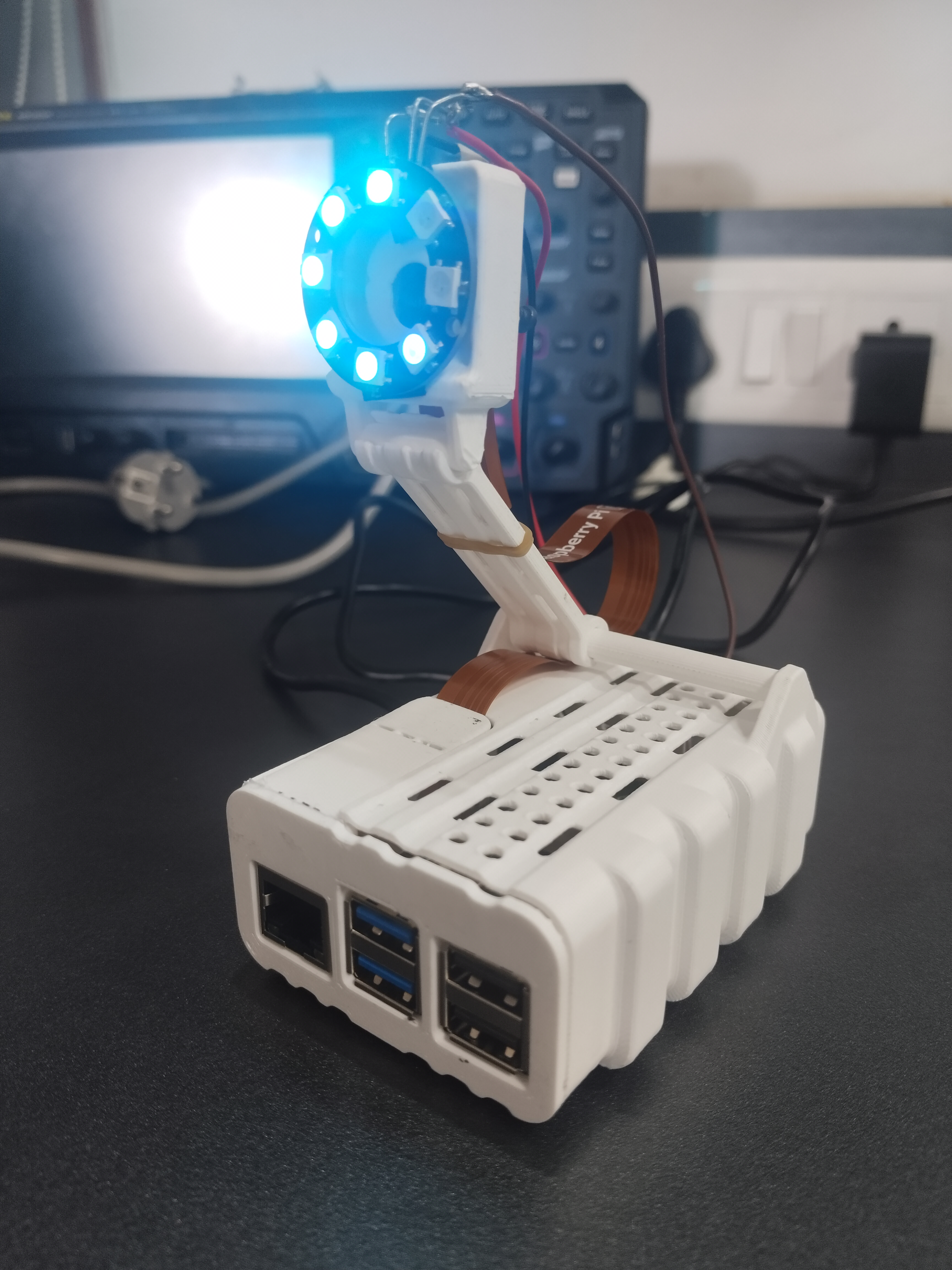
A working beta on a Raspberry Pi 5 with audio and LED feedback, validated with Bachelor of Physiotherapy students under faculty mentorship spanning both AIML and Physiotherapy departments - which puts the accuracy path on clinical rather than purely synthetic data. A costed manufacturing route to pilot and mass production is defined.
- Accuracy on synthetic data
- 85%
- Projected on clinical data
- 95%
- Response time
- 200ms
- False positives removed
- 40%
Under the hood
- Edge inference on device
- Adaptive state machine
- Temporal signal filtering
- Longitudinal risk modelling
Built with
Raspberry Pi 5IMX500 AI CameraTensorFlow LitePythonFlask + WebSockets